


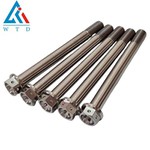


Titanium Tube And Pipe
Baoji Wantaida Titanium Material Co., Ltd. is located in Baoji in western China, a non-ferrous metal processing and sales of high-tech enterprises. The company focuses on the production and sales of titanium, zirconium, tantalum, nickel, tungsten, molybdenum and other non-ferrous metal materials. The products are exported to the United States, Britain, Germany, Italy, Japan, South Korea, Canada, Australia, Chile and other countries, well received by customers.


Why Choose Us?
High quality
Each batch of goods has a corresponding quality inspection report to solve your concerns about product quality.
Professional solution
With rich experience and one-to-one service, we can help you choose products and answer technical questions.
Good services
Customer service will update you the logistics information of the goods in time to ensure that the goods are delivered in time.
Quick transportation
We cooperate with professional shipping, air transportation and express logistics companies to provide you with the best and fastest transportation solutions.
Titanium tubes and pipes ares used in a range of applications including use in industrial pipework, titanium heat exchangers, condensers and evaporators, consumer products, and in medical applications such as implants.
Benefits of Titanium Tube and Pipe
Light-weight and high stamina:
One of one of the most significant benefits of titanium tubes is their phenomenal strength-to-weight proportion. Titanium has to do with 40% lighter than steel, yet it flaunts comparable strength degrees. This combination of stamina and also lightweight residential properties makes titanium tubes excellent for applications where weight reduction is vital, such as in aerospace, marine, as well as automotive industries. Making use of titanium tubes in these industries contributes to enhanced gas performance, reduced exhausts, as well as enhanced performance.
Rust resistance:
Titanium is renowned for its outstanding resistance to corrosion. It develops a protective oxide layer when revealed to air or moisture, avoiding additional oxidation and also making sure exceptional durability. In rough atmospheres, such as marine settings or chemical processing plants, titanium tubes outmatch stainless-steel and also other metals, bring about decreased maintenance expenses as well as increased functional dependability.
High temperature performance:
Titanium tubes can endure heats without losing their mechanical residential properties, making them appropriate for applications in aerospace, power generation, as well as commercial processes. They exhibit superb creep resistance and preserve their stamina and also integrity also at raised temperatures, offering a degree of performance that few various other products can match.
Biocompatibility:
The biocompatibility of titanium makes it a top choice for clinical applications. Titanium tubes are widely used in medical implants, dental implants, and medical instruments. The body easily accepts titanium, reducing the threat of unfavorable reactions as well as guaranteeing successful clinical procedures. Its safe as well as non-allergenic properties have actually made it essential in the clinical field.
Excellent thermal conductivity:
Titanium’s high thermal conductivity makes it an appealing choice for warmth exchangers and also other thermal monitoring applications. Its capacity to successfully transfer warm permits better energy performance and also temperature level law in various systems as well as tools.
Longevity and also cost-effectiveness:
Due to its outstanding rust resistance and also longevity, titanium tubes have a lengthy life span. Although the initial price of titanium might be higher than some other materials, its prolonged life expectancy causes considerable expense financial savings over time. Additionally, the decreased requirement for maintenance as well as substitute expenditures further adds to the overall cost-effectiveness of titanium tubes.
Types of Titanium Tube and Pipe
Welded titanium tube for low-pressure fluid transportation
Welded titanium tubes for low-pressure fluid transportation are also known as welded tubes. They are welded titanium tubes used to transport water, gas, air, oil, and heating steam, which are usually lower-pressure fluids and other uses.
In addition to being directly used to transport fluids, welded titanium tubes for low-pressure fluid transportation are also used as raw tubes for galvanized welded titanium tubes for low-pressure fluid transportation.
Galvanized welded titanium tube for low-pressure fluid transportation
Galvanized and welded titanium tubes for low-pressure fluid transportation are also called galvanized and welded titanium tubes short. They are hot-dip galvanized welded titanium tubes used to transport water, gas, air, oil, heating steam, warm water, etc., usually low-pressure fluids or other uses.
Common carbon titanium wire sleeve
They are titanium tubes commonly used in industrial and civil buildings, installations and equipment, and other electrical equipment projects for the maintenance of electrical wires.
Titanium tube with a longitudinal electric (resistance) weld
A titanium tube with a weld line parallel to the longitudinal direction of the titanium tube. Usually divided into metric welding titanium tube, welding thin wall tube, transformer cooling oil tube, and so on.
Submerged arc welded titanium tubes with spiral seams for conveying pressurized fluid
It is made of hot-rolled titanium strip coil as tube blank, often formed by a warm spiral, welded by double submerged arc welding method, and used for pressure fluid transportation.
This kind of titanium tube has strong pressure bearing capacity, good welding performance, and is safe and reliable. The titanium tube has a large diameter, high transport efficiency, and can save investment in laying pipelines, mainly used to transport oil and natural gas pipelines.
Spiral seam high-frequency welded titanium tubes for pressurized fluid transportation
This type of titanium tube is made of a hot-rolled titanium strip coil as a tube blank, which is spirally formed at room temperature, and is welded by high-frequency lap welding, and used for pressure fluid transportation.
This type of titanium tube has strong pressure-bearing capacity and good plasticity, which is convenient for welding and processing, and is safe and reliable. And the titanium tube has a large diameter and high transport efficiency and is mainly used for laying pipelines for transporting oil and natural gas.
Submerged arc welding titanium tubes for general low-pressure fluid transportation
This type of submerged arc welding titanium tube is made of hot rolled titanium coil as a tube blank, spirally formed at room temperature, and is made by double-sided active submerged arc welding or single-sided welding. It is mainly used for water, gas, air and steam, and other low-pressure fluid transportation.
High-frequency welded titanium tube with spiral seam for general low-pressure fluid transportation
This spiral seam high-frequency welded titanium tube is made of a hot-rolled titanium coil as a tube blank, spirally formed at room temperature, and welded by high-frequency lap welding, usually used for low-pressure fluid transportation.
Spiral welded seam titanium tube for pile
This type of titanium tube is made of hot-rolled titanium strip as a tube blank, spirally shaped at room temperature, and made by double-sided submerged arc welding or high-frequency welding, and is used for root piles in civil engineering structures, docks, bridges, and the like.
Application of Titanium Tube and Pipe
Chemical processing plant
In chemical plants, various aggressive solutions are used and the environment becomes very aggressive. In addition, these installations require heat exchangers, well-defined piping, and other equipment to cope with these extreme conditions. Titanium grade can withstand very aggressive environments and services for a long time.
Petroleum industry
The oil and gas industry involves high-pressure and high-temperature applications. So, wells in the oil and gas industry require a piping system that can continuously work smoothly in extreme temperature and pressure atmospheres. Here, titanium pipes A show high corrosion resistance and temperature carrying capacity, hence useful in subsea, downhole, and topside applications.
Aerospace
Titanium pipes are useful in many applications in the aerospace industry. These pipes are suitable for both the airframe and engine components. Titanium grade provides resistance to fatigue and cracking; In addition, these pipes can operate at high temperatures. These tubes are tensile resistant and lighter and have high strength and density.
Power generation plants
For transporting water and steam at high temperatures, titanium tube A is a suitable choice. Here, the power plant requires grade 2 titanium tubes. The titanium grade allows the device to operate smoothly in all conditions.
Raw material preparation:
a. Select high-purity titanium raw materials, such as titanium ingots or blocks.
b. Pre-treat the titanium materials to eliminate surface oxides, impurities, and contaminants.
Heating of titanium materials:
a. Place the titanium materials in a vacuum furnace or a controlled atmosphere heating furnace.
b. Regulate the heating temperature and duration to attain suitable thermal conditions, typically above the α-β phase transition temperature.
Forging of titanium materials:
a. Forge the heated titanium materials using specialized equipment.
b. Employ forging techniques to shape the titanium materials into cylindrical or tubular forms.
Cold working of titanium tubes:
a. Perform cold working processes like cold rolling or cold drawing on the forged titanium billets.
b. Gradually reduce the diameter and wall thickness of the titanium billets to achieve the desired dimensions of the titanium tubes.
Annealing treatment of titanium tubes:
a. Subject the cold-worked titanium tubes to an annealing process in a designated furnace.
b. Control the annealing temperature and duration to achieve the desired grain size and mechanical properties of the titanium tubes.
Trimming and cutting of titanium tubes:
a. Utilize machining techniques (e.g., milling, cutting) to trim the ends and achieve precise lengths for the titanium tubes.
b. Employ machining processes to ensure smooth and accurate dimensions.
Surface treatment of titanium tubes:
a. Cleaning: Thoroughly clean the titanium tubes to remove surface impurities and contaminants.
B. Acid etching: Employ suitable acid solutions for acid etching of the titanium tubes, eliminating oxide layers and surface impurities.
Quality inspection of titanium tubes:
A. Visual inspection: Conduct visual inspections to detect surface defects, scratches, cracks, etc., in the titanium tubes.
B. Dimensional measurement: Utilize precision measuring tools to measure the diameter, wall thickness, and length of the titanium tubes.
C. Material performance testing: Perform hardness testing, tensile testing, impact testing, etc., to evaluate the mechanical and physical properties of the titanium tubes.
Final treatment of titanium tubes:
A. Surface coating: Apply surface coatings such as anodizing or electroplating to the titanium tubes as per requirements.
B. Secondary processing: Perform further machining operations, including expanding, bending, etc., based on specific application needs.
How to Choose the Right Titanium Tube?
Choosing the right titanium tube depends on several factors, including the application, the required mechanical properties, and the budget. When selecting a titanium tube, consider the following:
Grade:
Each grade of titanium has different mechanical properties. Choose a grade that is appropriate for the application.
Size and shape:
Determine the size and shape of the tube required for the application.
Wall thickness:
The wall thickness of the tube affects its strength and durability.
Seam type:
If choosing a welded tube, consider the type of seam and its impact on strength and durability.

Cleanness is critical when TIG welding titanium
Welding titanium tubing requires extreme cleanness—the base metal, filler metal, and welding environment must be immaculate. Contamination by natural body oils, oils from the forming and drawing process, shop dust, paint, dirt, cutting fluids, and lubricants all can lead to embrittlement and weld failure.
Start by cleaning the work area and ridding it of any debris, and be certain to choose a place with minimal airflow so as not to disturb the shielding gas during welding. Next degrease both the filler rod and the base metal: Wear nitrile gloves dedicated to this purpose to prevent body oils from rubbing off on these items. Then apply methyl ethyl ketone (MEK) to a clean, lint-free cloth and wipe the titanium to remove any remaining surface contamination. At this point place the filler rod into an airtight container to prevent further contamination.
Before welding, remove the oxide scale, which forms when the titanium reacts with oxygen, from the surface of the tubing. This oxide layer provides titanium with its notable corrosion resistance. Still, it must be removed before welding because it melts at a higher temperature than titanium and can enter the molten weld pool to create inclusions that weaken the weld.
Either a die grinder with a carbide deburring tool or a carbide file—both dedicated to titanium—works best to remove the oxide layer from the weld joint. Steel wool and abrasives are not recommended because they can cause contamination. Remember to use a low grinding speed to prevent excessive heat. Wipe the joint once more with MEK or acetone-soaked cloth after the oxide layer has been ground away. Wait for the solvent to fully evaporate before striking an arc, because some solvents have low flash points.
A perfect fit(up)
Joint fit-up is arguably more important on titanium tubing than on any other metal tubing because it is critical to prevent oxygen from entering the weld. The joint should be square (do not create a V-notch), which helps minimize the amount of heat and weld metal needed to fill the joint; this in turn lowers the chance of burn-through and contamination.
Clamp the pieces into a positioner or on a workstation to make sure the two ends are butted together as tightly and accurately as possible.
You do not need to preheat most thin-wall titanium tubing and pipe. However, consult with your welding equipment supplier if you plan to weld titanium more than ⅛ inch thick, because some preheat and postheat may be beneficial.
Shielding gas coverage in titanium TIG welding
Pure argon is recommended for welding titanium because of its high purity and low moisture content. A 75/25 mixture of argon/helium may be used to improve stability and increase penetration only when specified.
The American Welding Society (AWS) recommends measuring welding gas purity to make sure it meets the standards set for each application. Typical specifications suggest that shielding gas be at least 99.995 percent pure with no more than 20 parts per million (PPM) of oxygen and a dew point greater than -76 degrees F. Other applications require a 99.999 percent pure flow of argon.
Outfitting your welding torch with a trailing shield is critical—otherwise the risk of oxygen contamination rises, and with it the potential for cracking. Some welders fabricate their own trailing shields, although many styles are available for purchase. Trailing shields conform to the shape of the tube and follow the GTAW torch around the pipe. The shields provide an extra protection of argon over the weld after the torch and its argon flow have passed. Setting the torch and trailing shield gas flow at 20 cubic feet per hour (CFH) provides the best coverage.
Purging, a process that eliminates the oxygen contained within the pipe, also
is required when welding titanium tubing. This process can be completed with any kind of purge dam: water-soluble dams, rubber gaskets, specialty tape, or inflatable bladders. Argon flows into the dammed area to replace the oxygen contained within the tubing. Allow the argon to flow long enough to replace the oxygen 10 times over to ensure the purest welding environment.
Always use a clean, nonporous plastic hose to transport the shielding gas to the torch, trailing shield, and purge. Do not use rubber hose; rubber is porous and absorbs oxygen that could contaminate the weld.
Filler metal selection
Use a filler metal when welding titanium tubing thicker than 0.010 in. Typically, you should match the filler metal to the grade of titanium being welded—it should be an exact match. Some applications allow exceptions, such as a filler metal with a lower yield strength than the base metal to improve ductility. Any variation, however, should be carefully tested and investigated to make sure it meets process demands and specifications.
The right torch and consumables for TIG welding aluminum tubing
GTAW gives the welder more control over heat input and the puddle than any other welding process. A GTAW inverter with high-frequency arc starts, remote amperage control capabilities, a postflow timer, and an output of at least 250 amps, will weld titanium nicely.
Always set the machine's polarity to direct current electrode negative (DCEN). DCEN offers deeper penetration and a narrower bead in comparison to direct current electrode positive (DCEP).
Match the inverter with either an air- or water-cooled torch. An air-cooled torch provides good performance if you're welding below 150 amps and it costs less than a water-cooled torch. On the other hand, a water-cooled torch is smaller, more maneuverable, and permits welding at higher amperages for extended periods, although most welds on titanium are short and created at output levels below 150 amps.
Use a 2 percent ceriated tungsten electrode ground to a point and matched to the welding current as follows:
Up to 90 amps: 1⁄16 in. or smaller.
90 - 200 amps: 3⁄32 in.
More than 200 amps: 1⁄8 in.
Use a gas lens to distribute the shielding gas evenly and to create a smooth gas flow over the weld puddle.
Strike an arc and get to work
First, cut off the end of the filler rod to expose a pure, contaminant-free point to start the weld. Start the argon gas flowing for a few seconds before striking the arc to ensure the weld area is fully covered.
Use the inverter's high-frequency arc-starting feature to strike an arc. Torch angles, torch speed, and filler wire angles similar to those used in welding stainless steel provide optimal conditions for welding titanium tubing.
It is fairly easy to create the weld puddle with titanium, but it may not move easily. Pushing the weld puddle along with the arc and the filler rod generally provides the best results, but you must keep the filler rod within the shielding gas envelope while welding. It's also important to minimize heat input because excessive heat can crack the weld. Use a dab technique (at a steady travel speed) with the filler metal instead of leaving the rod in the puddle at all times.
Once you are finished with the weld, allow 20 to 25 seconds of postflow to protect the seam as it cools down below the 800-degree-F threshold. This is the point at which oxygen no longer reacts with titanium. Some welding codes may require postflow until the temperature drops below 500 degrees F, so always follow the written procedure.
Titanium offers the benefit of showing its true colors once the weld is finished. The final color of the weld joint indicates how well the shielding gas protected the weld from contaminants and how thick the oxide layer is. In addition to visual inspection, dye penetrant inspection, hardness testing, X-ray, ultrasonic, and destructive tests determine the quality of titanium welds.
Our Factory
WTD Company has been deeply engaged in the non-ferrous metals industry for many years and has accumulated rich production experience, especially in the processing of new titanium materials such as TA15, which is at the forefront of the world.


